
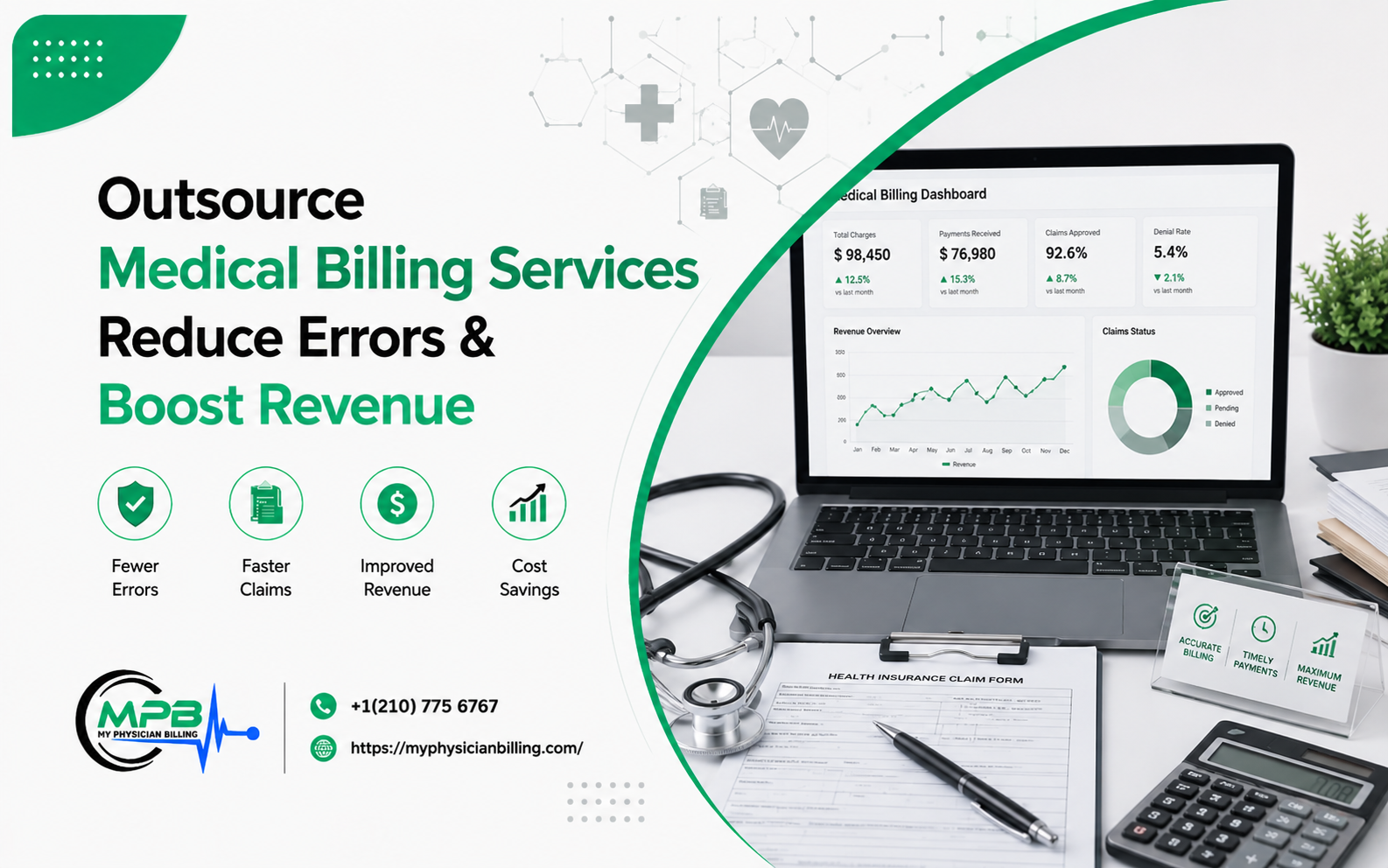
Outsource Medical Billing Services Reduce Errors & Boost Revenue
Healthcare providers lose thousands of dollars every year to billing errors, denied claims, and slow reimbursements. That is why more clinics and hospitals now outsource medical billing services to specialized companies. In simple terms, outsourcing medical billing means handing over the entire billing cycle, from coding to claim submission, to an experienced third-party team so your in-house staff can focus on patient care instead of paperwork.
This approach helps reduce claim denials, speeds up payments, and improves overall revenue cycle accuracy. Below, we break down exactly how it works, why it matters, and how to know if it is the right move for your practice.
Outsource Medical Billing Services What It Really Means for Your Practice
When a practice decides to outsource medical billing services, it partners with a specialized billing company that manages coding, claim submission, payment posting, and denial follow-up.
This is different from keeping billing in-house, where your own staff handles everything, often with limited coding expertise or outdated software.
How the Outsourcing Process Works
A typical outsourced billing workflow includes:
- Patient data and charge entry
- Medical coding based on physician documentation
- Claim scrubbing and submission to insurance payers
- Payment posting and reconciliation
- Denial management and appeals
Each step is handled by professionals who work with these systems daily, which naturally reduces the chance of costly mistakes.
The Real Benefits of Outsourcing Medical Billing Services (Beyond Just Saving Time)
Practices that shift to outsourced billing usually notice changes within the first few billing cycles. The benefits of outsourcing medical billing services go beyond just saving time.
Here are the most common advantages:
- Fewer claim denials due to trained coding specialists
- Faster reimbursement cycles and improved cash flow
- Lower administrative overhead and staffing costs
- Access to updated billing software and compliance knowledge
- More time for clinical staff to focus on patients
For smaller practices especially, this means not having to hire, train, or retain an in-house billing team, which can be expensive and time-consuming.
Outsource Medical Claim Processing Services and Stop Losing Money to Errors
One of the biggest reasons practices choose to outsource medical claim processing services is error reduction. Even small coding mistakes can lead to claim rejections or delayed payments.
Common Coding and Billing Mistakes
Billing errors often happen because of incorrect code usage, missing documentation, or outdated payer rules. For example, a common evaluation and management code like 99213, used for established patient office visits of low to moderate complexity, must be applied correctly based on visit time and documentation. Using it incorrectly, or applying it inconsistently with physician notes, is a frequent cause of claim denials.
Experienced billing teams are trained to catch these issues before submission, not after a rejection notice arrives. This proactive approach is one of the clearest advantages of working with a dedicated billing partner rather than relying on general administrative staff.
How Do You Know Your Practice Is Ready to Outsource Medical Billing
Not every practice needs to outsource medical billing right away, but certain signs make it worth considering.
Consider outsourcing if your practice is experiencing:
- A rising number of denied or delayed claims
- Staff turnover in your billing department
- Difficulty keeping up with payer rule changes
- Slower cash flow despite steady patient volume
- Limited internal resources for compliance updates
If any of these sound familiar, it may be the right time to explore outsourced billing support rather than continuing to patch problems internally.
Small Practices vs Large Healthcare Groups
Smaller clinics often outsource to avoid hiring a full billing department. Larger healthcare groups, on the other hand, may outsource specific functions like claim processing or denial management while keeping some billing tasks in-house. Either way, the goal remains the same: fewer errors and steadier revenue.
Choosing the Right Partner to Outsource Medical Billing Services What Actually Matters
Not all billing companies offer the same level of service, so choosing carefully matters. A good partner should understand your specialty, follow current compliance standards, and communicate clearly about claim status and performance.
Before making a decision, it helps to ask a few practical questions:
- Do they have experience with your specific specialty or practice size?
- How do they handle denied claims and appeals?
- What reporting and transparency do they provide?
- Are their systems compliant with current healthcare data regulations?
Choosing the right billing partner is not just about saving money. It is about protecting your revenue cycle and giving your team the space to focus on patient outcomes instead of paperwork.
If your practice is dealing with frequent denials or slow reimbursements, it may be worth having a conversation with a medical billing specialist to see where the gaps are and how outsourcing could help.
Frequently Asked Questions
What does it mean to outsource medical billing services?
It means hiring a specialized company to manage coding, claim submission, and payment follow-up instead of handling billing in-house.
What are the main benefits of outsourcing medical billing services?
Fewer claim denials, faster payments, lower overhead costs, and more time for clinical staff to focus on patient care.
How is outsourced medical claim processing services different from regular billing?
It focuses specifically on accurate claim submission and denial management, often reducing errors that lead to payment delays.
Is outsourcing medical billing suitable for small practices?
Yes, many small practices outsource medical billing to avoid the cost of hiring and training an in-house billing team.
How do billing companies reduce coding errors like incorrect CPT code use?
Trained coders review documentation carefully before submission, catching mismatches or incorrect code applications, such as improper use of E/M codes, before claims are denied.

Comments are closed