
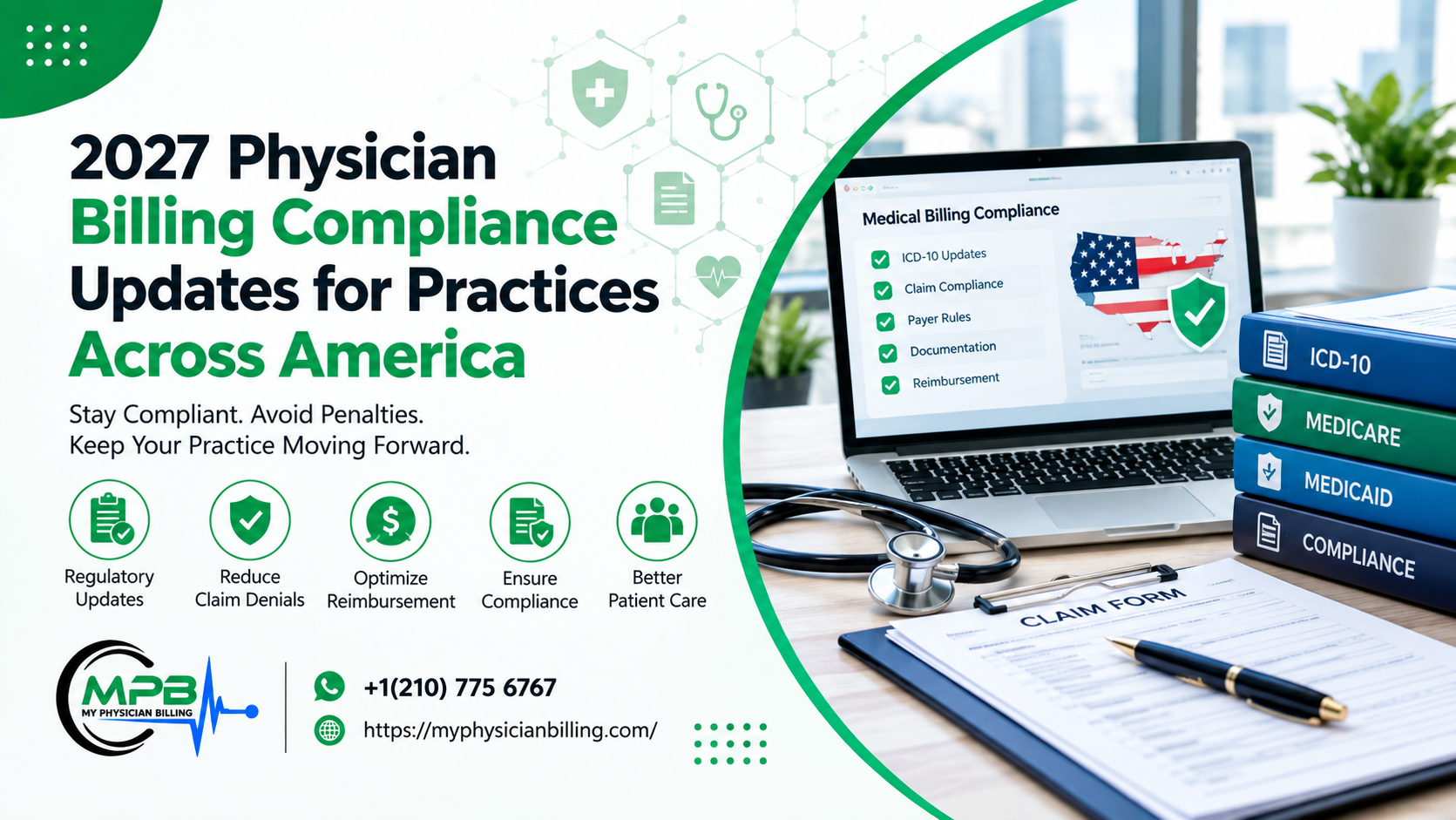
2027 Physician Billing Compliance Updates for Practices Across America
2027 is set to bring significant shifts in how physician practices handle compliance. With federal agencies tightening oversight and payers updating their reimbursement rules, staying ahead is no longer optional. For practices across America, understanding these updates is essential to protect revenue and avoid penalties.
Key CMS Changes for Physician Billing Compliance in 2027
One of the biggest changes comes from CMS. The 2027 Physician Fee Schedule final rule introduces stricter documentation requirements for evaluation and management services. Time based coding will now require explicit start and end times in the medical record and medical decision making must be clearly supported. Practices that rely on templated notes without patient specific details will face increased scrutiny during audits.
Another major update is provider credentialing and enrollment. In 2027, CMS is shortening the timeline for revalidation and requiring more frequent updates to practice information through PECOS. Lapses in enrollment can lead to claim denials and deactivation. Practices should assign a dedicated resource to monitor enrollment deadlines and keep provider data accurate to prevent interruptions in reimbursement.
Telehealth and No Surprises Act Updates Every Practice Must Follow
Another major update involves the No Surprises Act expansion. In 2027 the good faith estimate requirement will extend to more scheduled services and include additional data elements. Physician practices will need to provide cost estimates within 24 hours for services scheduled at least 10 days in advance. Failure to comply can result in patient disputes and financial penalties. Investing in automated estimate tools and front desk training will be critical.
Telehealth compliance is also evolving. While pandemic era flexibilities have ended, CMS has finalized permanent telehealth rules for 2027. These include requiring an in person visit within six months before a mental health telehealth service, stricter place of service coding and mandatory use of new telehealth modifiers. Practices must audit their telehealth workflows to ensure they meet originating site and technology requirements.
At My Physician Billing, we help practices interpret these evolving regulations and translate them into daily workflows that work for providers and staff.
2027 CPT Coding and Documentation Requirements to Stay Compliant
Coding updates for 2027 also demand attention. The AMA has introduced over 300 CPT code changes including new codes for remote therapeutic monitoring, AI assisted diagnostics and revised codes for chronic care management. ICD-11 transition planning has also started, with dual coding recommended during 2027 for readiness. Practices that delay coder training will see higher denial rates.
Payer specific compliance is another area of focus. Commercial payers are adopting advanced claim editing software powered by artificial intelligence to detect upcoding, unbundling and medical necessity issues. Prepayment reviews are increasing. To stay compliant, practices should implement proactive internal audits, maintain strong medical necessity documentation and keep payer policy libraries updated.
HIPAA and Information Blocking Rules Impacting US Practices in 2027
Information blocking and interoperability rules are getting stronger. Under the 21st Century Cures Act updates for 2027, physician practices using certified EHR technology must ensure seamless data sharing with patients and other providers. Information blocking penalties for providers can now reach up to one million dollars per violation. Regular EHR compliance checks and staff education on data access requests will be necessary.
HIPAA security rule modernization is also scheduled for 2027. The Department of Health and Human Services is requiring multi factor authentication, encryption of data at rest and regular risk analysis documentation. Small practices are not exempt. A documented HIPAA security risk assessment must be completed annually and policies must be updated to reflect new cybersecurity threats.
USA Government Physician Billing Policies Reference for 2027
To ensure your practice stays compliant in 2027, always refer to official government sources for the latest rules. The Centers for Medicare and Medicaid Services publishes the annual Physician Fee Schedule final rule which covers E and M documentation, telehealth place of service and reimbursement rates. You can review it at cms.gov Medicare Fee for Service Payment PhysicianFeeSched.
The Office of Inspector General provides Compliance Program Guidance for Individual and Small Group Physician Practices which outlines fraud, waste and abuse prevention and internal auditing best practices. This resource is available at oig.hhs.gov compliance physician education.
The Department of Health and Human Services has updated the HIPAA Security Rule for 2027 modernization. It includes new requirements for multi factor authentication, encryption and annual risk assessments. Details are available at hhs.gov hipaa for professionals security.
The No Surprises Act Good Faith Estimate Requirements explain cost estimate timelines and patient protections for scheduled services. Official guidance is posted at cms.gov nosurprises policies and resources.
Finally, the 21st Century Cures Act Information Blocking Rules and PECOS Enrollment and Revalidation Guidelines should be reviewed regularly. These are available at healthit.gov information blocking and pecos.cms.hhs.gov respectively. Aligning your billing workflows with these official policies is the best way to avoid denials and penalties in 2027.
How to Build a Strong Compliance Plan for Physician Billing in 2027
For practices across America, the path to compliance in 2027 involves people, process and technology. Start by conducting a comprehensive compliance risk assessment. Identify gaps in documentation, coding, billing and privacy. Update your compliance plan and ensure your compliance officer or lead has authority and resources to enforce policies.
Training is equally important. Annual compliance training should cover fraud, waste and abuse, accurate coding, telehealth rules and HIPAA. Establish clear communication channels between teams and hold monthly meetings to review denial trends and audit findings.
Technology can help reduce risk. Automated coding assistance, claim scrubbers with 2027 rules and real time eligibility verification can prevent errors before claims are submitted. However, technology is not a substitute for oversight. Human review remains essential.
To strengthen your strategy, create a quarterly compliance calendar. Use the first quarter to review CMS final rules, second quarter for coding audits, third quarter for HIPAA updates and fourth quarter for year end reporting. Also pay close attention to value based care compliance including quality reporting accuracy and risk adjustment documentation.
If you want to simplify compliance while protecting revenue, the team at My Physician Billing offers tailored solutions designed for independent practices and large medical groups alike. With proactive auditing and up to date regulatory knowledge, you can reduce audit risk.
The right partner does more than handle claims. At My Physician Billing, the goal is to build a compliance focused revenue cycle that supports growth and peace of mind.
Many practices across the country are already preparing for 2027. By choosing to work with My Physician Billing, you gain a partner who understands both the clinical and business side of healthcare and keeps your practice ready for what is next.
Frequently Asked Questions
1. What are the biggest physician billing compliance changes for 2027?
The biggest changes include stricter E and M documentation rules, expanded No Surprises Act requirements, permanent telehealth coding rules, enhanced information blocking penalties and HIPAA Security Rule modernization.
2. How can practices prepare for 2027 telehealth billing compliance?
Practices should review CMS telehealth place of service rules, use correct modifiers, document in person visit requirements for mental health and verify payer specific telehealth policies before billing.
3. Will small practices be affected by 2027 HIPAA updates?
Yes. Small practices must implement multi factor authentication, encryption, and annual risk assessments. There is no exemption based on practice size.
4. How often should practices audit their billing in 2027?
Experts recommend at least quarterly internal audits focusing on high risk areas like E and M coding, modifier use and medical necessity to avoid AI driven payer audits.
5. What happens if a practice fails to meet 2027 compliance requirements?
Non compliance can lead to claim denials, prepayment reviews, repayment demands, penalties up to one million dollars for information blocking and potential exclusion from federal programs.

Comments are closed