





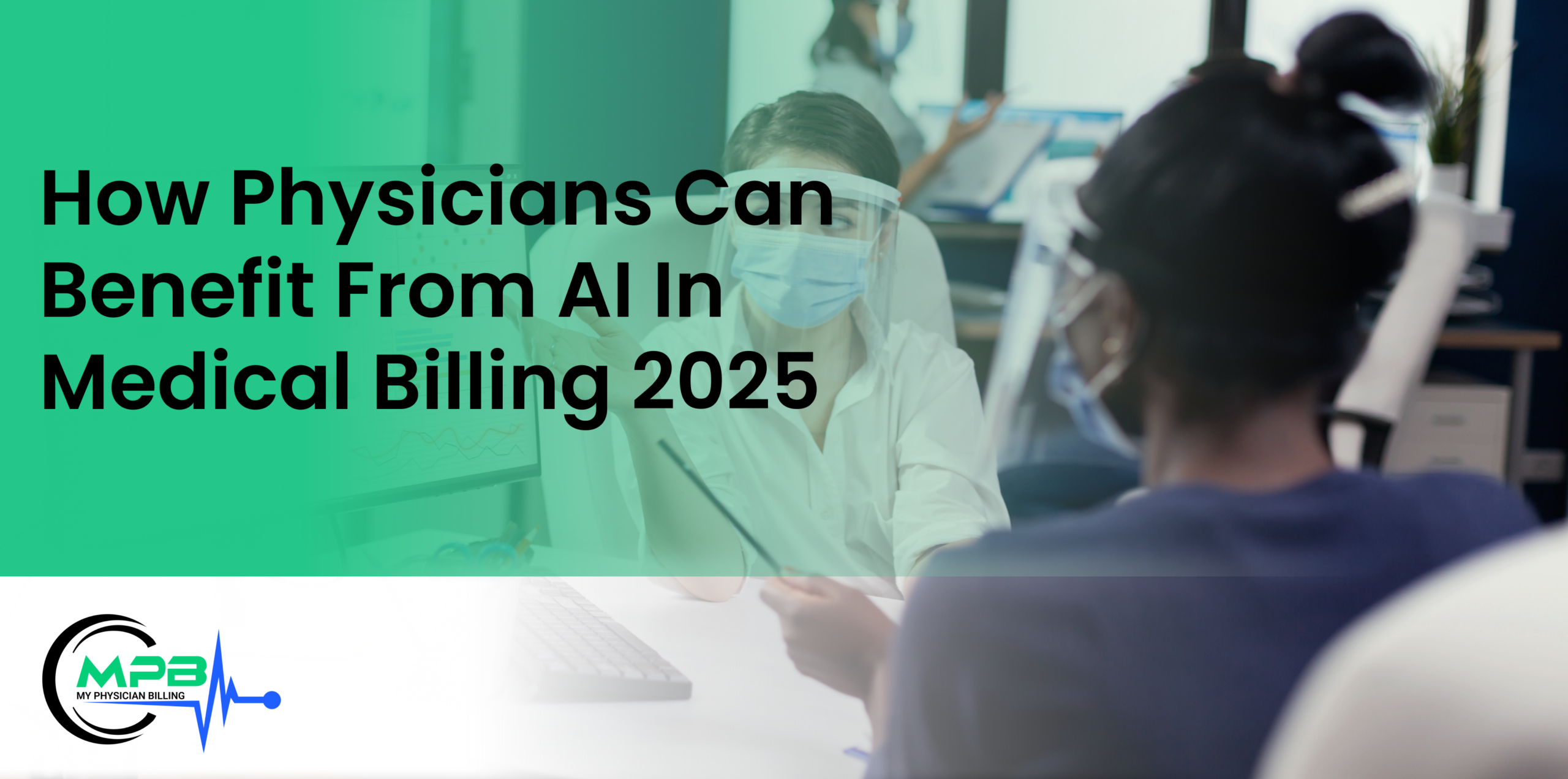
How Physicians Can Benefit From AI in Medical Billing 2025
Each year, healthcare providers in the U.S. lose billions due to medical billing errors — with an estimated $935 million directly linked to inaccurate coding, claim denials, and incomplete documentation. Physician practices, in particular, face heavy administrative burdens that take valuable time away from patient care. According to the American Medical Billing Association’s 2024 report, over 30% of physician claims experience first-time denials due to missing documentation, coding inaccuracies, or payer-specific discrepancies.
With the rapid growth of artificial intelligence (AI) since 2023, physician practices are adopting smarter billing technologies to reduce denials, ensure compliance, and streamline revenue cycle management. AI in physician billing helps automate claim submissions, detect coding errors, and optimize cash flow — all while allowing doctors to focus on their patients instead of paperwork.
AI in Physician Billing
Physician billing is complex because each specialty has unique coding rules, modifiers, and payer guidelines. Even a small error in claim submission can lead to revenue loss. AI in physician billing automates claim creation, verifies documentation, and matches procedures with accurate CPT and ICD codes.
For example, natural language processing (NLP) tools can analyze clinical notes and generate correct codes in seconds — reducing manual entry errors. By 2025, many medical practices have integrated AI-driven billing systems with EHRs (Electronic Health Records) to enhance efficiency, accuracy, and compliance.
AI for Accuracy in Physician Billing
Billing accuracy is crucial for financial success. AI for accuracy in physician billing reduces human errors by automatically reviewing documentation and highlighting discrepancies before submission.
This automation minimizes denied claims and accelerates reimbursements. As a result, billing teams can focus on higher-value tasks, such as payer communication and appeals, rather than constantly fixing coding mistakes. AI ensures every service rendered is billed properly, improving revenue and reducing administrative fatigue.
AI Tools for Medical Billing
Today’s physician practices use advanced AI tools for medical billing to simplify workflows. These systems utilize machine learning and predictive analytics to detect potential issues before they become denials.
AI tools also integrate with EHR systems, ensuring every procedure and note is captured correctly. Features such as real-time claim validation, denial prediction, and automated appeals reduce manual workload and speed up payment cycles.
In short, AI billing tools allow physicians to save time, minimize human error, and increase profitability with consistent, accurate billing performance.
AI in Physician Revenue Cycle Management
Managing the physician revenue cycle is a challenging process involving charge capture, eligibility verification, claim submission, and denial follow-ups. AI-powered revenue cycle management (RCM) can handle each of these steps automatically.
AI-driven systems identify underpayments, forecast cash flow, and provide real-time visibility into claim status. They also ensure compliance with payer policies and regulatory changes. This leads to faster reimbursements, fewer rejections, and improved practice stability.
AI in physician RCM helps practices remain audit-ready, reduce billing lag, and maintain consistent revenue streams.
Why Physician Billing Is Complex
Physician billing faces several challenges that make accuracy and efficiency difficult to achieve:
- Variety of Codes
Physicians across different specialties use a wide range of CPT and ICD codes. Each payer has different rules for coverage, bundling, and modifiers, increasing the chance of denials. - High Claim Volume
Busy practices handle hundreds of claims per day. Manual billing processes are slow and prone to missed charges or delayed submissions. - Documentation Gaps
Missing or incomplete documentation can lead to claim denials. AI ensures that every service is backed by proper medical necessity documentation before submission. - Payer-Specific Rules
Each insurance provider follows its own guidelines for reimbursement. AI tools stay updated with these rules, reducing inconsistencies and errors. - Frequent Denials
Denials are often linked to coding mismatches or insufficient justification. AI identifies denial patterns and corrects them automatically for future claims.
How Artificial Intelligence Is Transforming Physician Billing
AI is redefining the way physician practices manage their billing operations:
Step 1: Reading Data from Clinical Notes
AI tools analyze physician documentation and extract the procedures, diagnoses, and services performed — ensuring nothing is missed in charge capture.
Step 2: Suggesting Accurate Codes
AI suggests the correct CPT, ICD, and modifier codes, drastically reducing human errors.
Step 3: Validating Claims Before Submission
Claims are automatically checked for completeness, payer rules, and compliance before submission, reducing delays and denials.
Step 4: Predicting and Preventing Denials
AI algorithms study past denial data to anticipate and prevent future claim issues, improving first-pass acceptance rates.
Step 5: Automating Appeals and Follow-Ups
When denials do occur, AI systems generate appeal letters and automate follow-up reminders, ensuring nothing falls through the cracks.
Conclusion
Physician billing is no longer just a back-office task — it’s a critical component of practice success. With AI-powered solutions from Healthcare , physician practices can enhance billing accuracy, reduce claim denials, and accelerate reimbursements.
By combining human expertise and intelligent automation, Healthcare helps physicians maintain financial stability and regulatory compliance. The future of AI in physician billing lies in smart, connected technology that drives efficiency, transparency, and profitability.
Frequently Asked Questions (FAQs)
1. How can AI improve physician billing accuracy?
AI analyzes clinical documentation to recommend correct codes, preventing undercoding or overcoding. This leads to fewer denials and faster payments.
2. How does Healthcare assist physician practices with AI billing?
Healthcare offers AI-supported billing solutions tailored for physicians, combining automation with expert review to ensure accurate claim submissions and stronger revenue outcomes.
3. Is AI billing compliant with healthcare regulations?
Yes. Healthcare AI systems are regularly updated to meet HIPAA and payer-specific compliance standards, minimizing audit risk.
4. What are the challenges when implementing AI in physician billing?
Common challenges include data integration, system adoption, and training. Partnering with an experienced provider like Healthcare ensures a smoother transition.
5. How soon can practices see results after adopting AI billing tools?
Most practices report reduced denials and improved cash flow within 3–6 months of AI implementation.

Mediax
December 7, 2023Your health and well-being are our top priorities. We take the time to listen to your concerns, answer your questions.
Mediax
December 7, 2023We understand that every patient is unique, and their healthcare needs may vary. That\'s why we create individualized treatment plans.
Mediax
December 7, 2023Our clinic is strategically located for easy access, ensuring that you can reach us conveniently from various parts of the community.